


How To Calm An Overwhelmed Child?

Key Points
The early years of a child's life lay the foundation for lifelong health, learning, and well-being. Every child, including those with special healthcare needs, deserves the opportunity to grow in a supportive environment where their physical, social, emotional, and educational needs are met. A safe, loving, and nurturing home plays a vital role in healthy development. Simple everyday activities—such as playing, singing, reading, and talking with family—help children build strong relationships and develop important life skills. In addition, providing nutritious meals, regular physical activity, and enough sleep supports healthy growth and overall development.
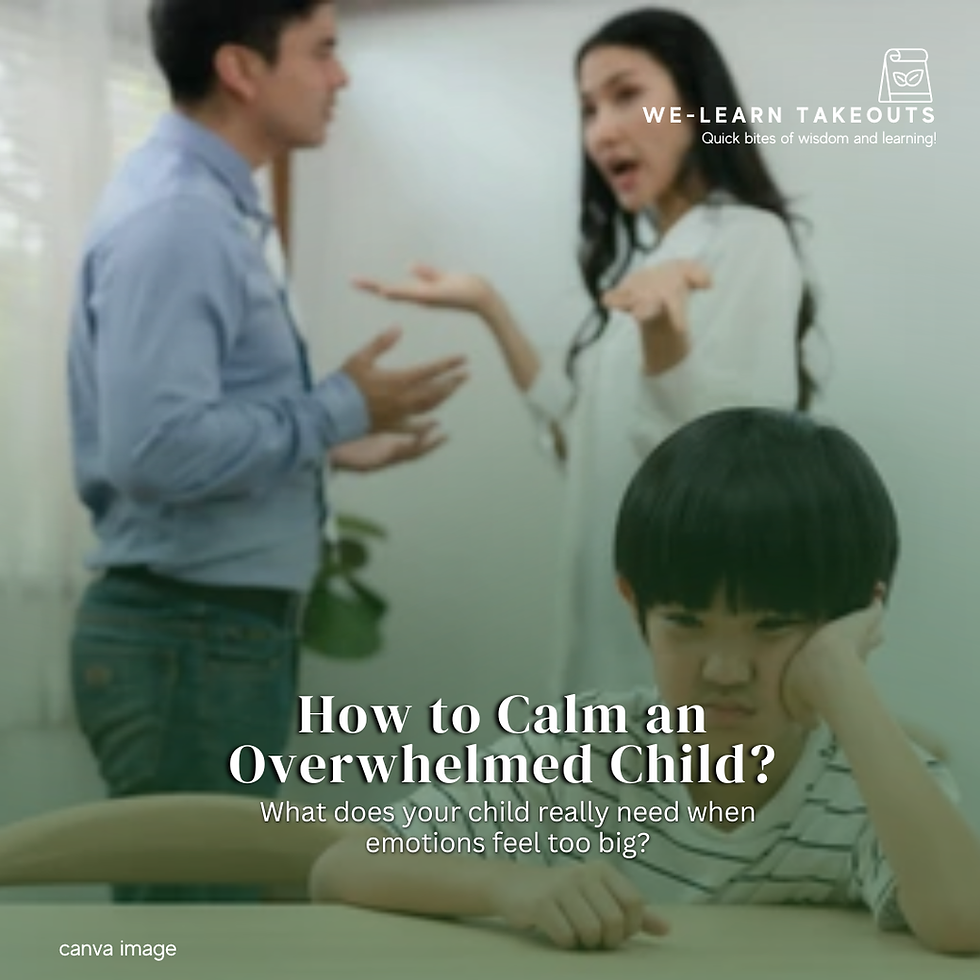
Every child feels overwhelmed from time to time. Big emotions, busy schedules, changes in routine, or even too much noise can make it difficult for children to cope. When a child is overwhelmed, they aren't trying to be difficult—they're communicating that they need support. Instead of focusing only on stopping the behavior, we can help children understand and manage their emotions in healthy ways. Here are five simple strategies that can make a big difference.
1. Stay Calm
Children often take emotional cues from the adults around them. Speaking softly, staying patient, and keeping a calm expression can help your child feel safe. Your calm presence reminds them that they are not alone and that things will be okay.
Try saying:"I'm here with you. We'll get through this together."
2. Give Them Time to Breathe
When emotions are running high, children may need a few quiet moments before they can listen or talk. Encourage slow, deep breaths together.
A simple breathing exercise:
Breathe in through the nose for four seconds.
Hold for two seconds.
Breathe out slowly through the mouth for four seconds.
Repeat three to five times.
Deep breathing helps the body relax and gives children a chance to regain control. 3. Listen Before You Solve
Sometimes children don't need immediate solutions—they simply need someone to hear them. Let them explain how they feel without interrupting or judging.
You can ask:
"Can you tell me what happened?"
"How are you feeling right now?"
"What do you need from me?"
Feeling heard helps children feel understood and supported. 4. Reduce the Overload
Too many tasks, loud sounds, bright lights, or long learning sessions can overwhelm young minds. If possible, simplify the situation.
You might:
Take a short break.
Move to a quiet space.
Break a big task into smaller steps.
Offer water or a healthy snack.
Small changes can help children feel more in control.
5. Encourage and Reassure
Once your child has calmed down, remind them that everyone experiences big feelings sometimes. Praise their effort to calm down and encourage them to keep practicing healthy coping skills.
You could say:
"You worked hard to calm your body."
"I'm proud of how you kept trying."
"It's okay to have big feelings."
Positive encouragement builds confidence and emotional resilience over time.
A Gentle Reminder for Parents
Helping an overwhelmed child isn't about having the perfect response every time. It's about creating a safe, loving environment where children know they can express their feelings without fear.
With patience, understanding, and consistent support, children gradually learn how to recognize their emotions, calm themselves, and face challenges with confidence.
"Children learn to regulate their emotions through the calm and caring relationships they experience with trusted adults."
Every calm moment you share today helps build your child's emotional strength for tomorrow.



Comments