


Positive Discipline vs. Punishment: What Helps Children Learn Best?
- wekid welearn
- 30 minutes ago
- 3 min read

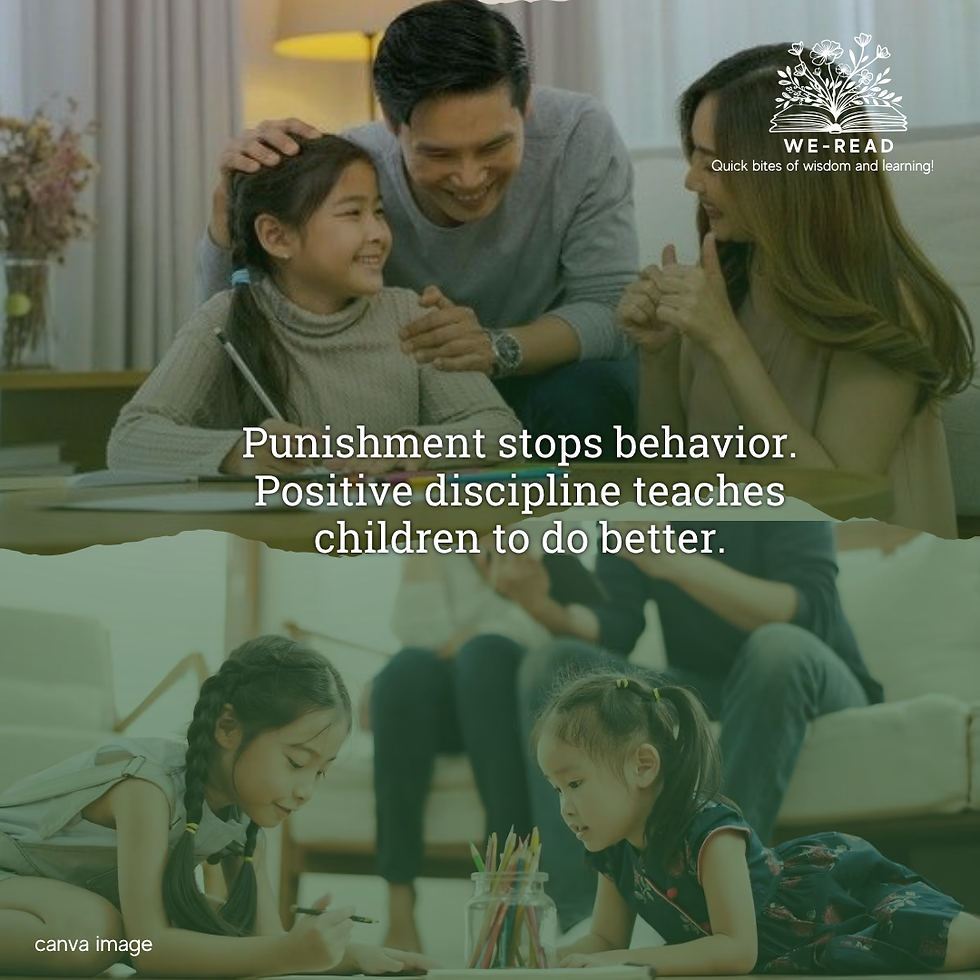
As parents, we all want our children to grow into kind, responsible, and respectful individuals. But when challenging behaviors arise, it's easy to wonder:
Should I discipline my child, or should I punish them?
Although these terms are often used interchangeably, they have very different goals—and those differences can have a lasting impact on a child's development.
What Is Positive Discipline?
Positive discipline is a respectful and encouraging approach that teaches children how to make better choices. Rather than focusing on punishment for mistakes, it helps children understand the consequences of their actions, develop self-control, and learn valuable life skills.
Positive discipline asks:
What can my child learn from this?
How can I guide them toward a better choice?
How can we solve this problem together?
The goal isn't just to stop the behavior today—it's to teach habits that last a lifetime.
What Is Punishment?
Punishment focuses on stopping unwanted behavior through fear, discomfort, or consequences. While it may produce immediate obedience, it doesn't always help children understand why their behavior was wrong or what they should do differently next time.
Punishment often emphasizes:
Blame
Fear of consequences
Obedience without understanding
Children may comply in the moment but still struggle to develop self-discipline and problem-solving skills.
Positive Discipline vs. Punishment
Positive Discipline | Punishment |
Teaches appropriate behavior | Focuses on the mistake |
Builds trust and respect | Often creates fear or resentment |
Encourages problem-solving | Demands immediate obedience |
Helps children develop self-control | Relies on external consequences |
Strengthens the parent-child relationship | Can weaken communication |
How to Practice Positive Discipline at Home
1. Stay Calm Before Responding
Children learn by watching adults. Taking a deep breath and responding calmly models emotional regulation.
2. Set Clear Expectations
Explain household rules in simple, age-appropriate language so children know what is expected.
3. Use Natural and Logical Consequences
Help children connect actions with outcomes. For example, if toys are left on the floor, they may be put away for the rest of the day until the child is ready to care for them responsibly.
4. Encourage Instead of Shame
Recognize effort and improvement. Encouraging words build confidence and motivate children to keep trying.
5. Solve Problems Together
Ask questions such as:
"What happened?"
"How do you think your choice affected others?"
"What can we do differently next time?"
These conversations help children think critically and take responsibility for their actions.
Positive Discipline in the Homeschool
Homeschooling provides countless opportunities to practice positive discipline every day. Learning at home isn't just about academics—it's also about building character, responsibility, patience, and respect.
When children become frustrated with a lesson or make mistakes, parents can guide them with patience instead of criticism. Encouraging perseverance, allowing breaks when needed, and celebrating progress create a learning environment where children feel safe to grow.
Remember, mistakes are not failures—they are opportunities to learn.
A Gentle Reminder for Parents
No parent responds perfectly every time, and that's okay. Parenting is a journey of learning alongside our children. When we choose guidance over fear and teaching over punishment, we help our children develop confidence, responsibility, empathy, and self-discipline.
Positive discipline doesn't mean being permissive. It means setting loving boundaries while teaching children the skills they need to make wise choices—both now and in the future.
Children thrive when they feel loved, understood, and guided. Positive discipline helps them learn not only what is right but also why it matters. By replacing punishment with patient teaching and consistent guidance, we nurture hearts that are confident, compassionate, and ready to grow.
At We Learner Center, we believe every child learns best in an environment filled with patience, encouragement, and love. Together, parents and educators can help children build lifelong habits that support both academic success and strong character.

Comments